 Param Vishisht Seva Medal (PVSM)
.svg) Ati Vishisht Seva Medal (AVSM) with Bar
Ati Vishisht Seva Medal (AVSM) with Bar
 Samanya Seva Medal (SM)
 Uttam Yudh Seva Medal (UYSM) & Yudh Seva Medal (YSM)
 Vishisht Seva Medal (VSM)
 Special Service Medals
 Indian Operation Vijay Star
 Operation Parakram Medal
 India High Altitude Service Medal
 Videsh Seva Medal
 India 50th Anniversary Independence Medal
 Indian 30 Years Long Service Medal
 Indian 20 Years Long Service Medal
 Indian 9 Years Long Service Medal
 UN UNAVEM medal
And Quiet Doesn’t Flow the Indus
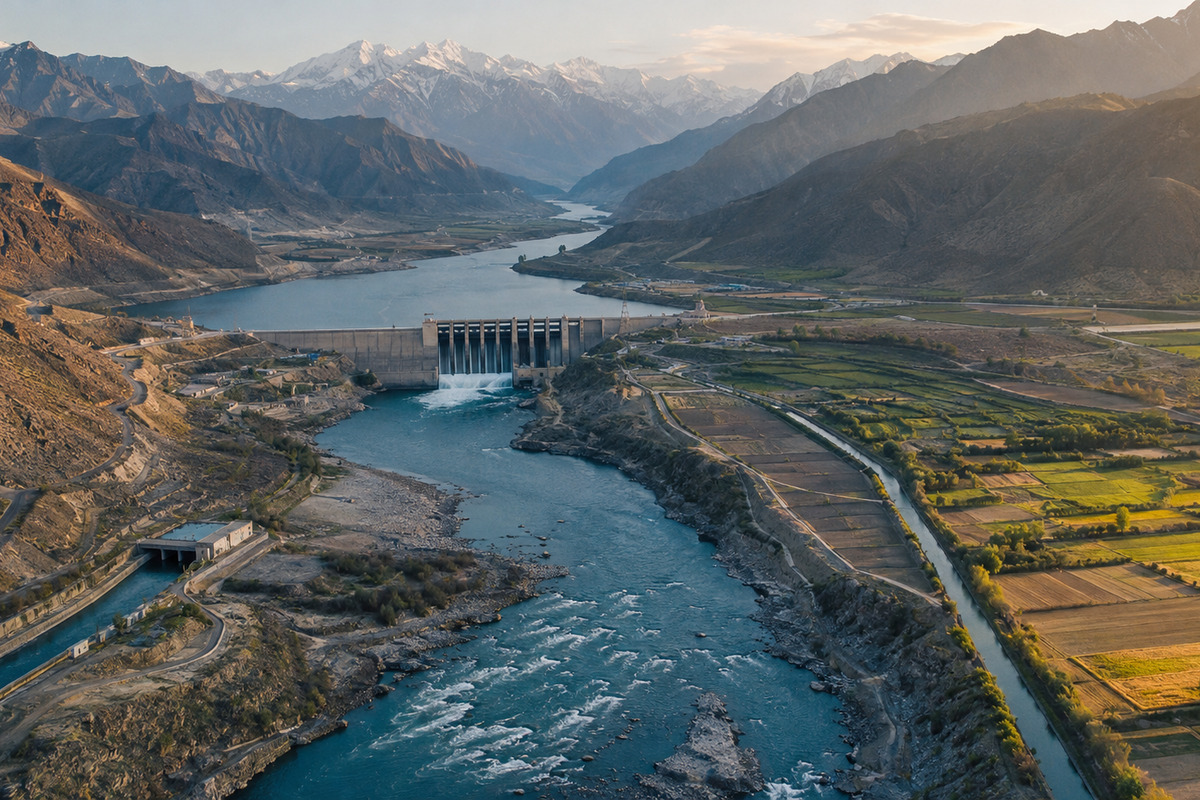
Mikhail Sholokhov penned the Nobel Prize winning, much acclaimed novel And Quiet Flows the Don, capturing the exploits of Russian Cossacks living around the mighty Don River. I heard my grandfather narrate equally fascinating tales about the mighty Indus, on which his native district headquarters, Campbellpore, now Attock, was located.
The Indus, which defined the destiny of the subcontinent in many ways, is part of the Hafta, or Sapta Sindhu, basin system. This basin includes the Yamuna and the somewhat illusory Saraswati, which is now being revived.
Equally interesting were tales about the harnessing of the Satluj for the construction of the Gang Canal to bring water to the arid region of Sri Ganganagar in Rajasthan. As a tehsildar with the Bikaner State, my grandfather would tell us about the resentment of Saraikis in Bahawalpur State and the colonisation around the Gang Canal following this diversion.
Most intriguing were his stories of the tussle for control of the Madhopur and Hussainiwala headworks, which were retrieved through deft cartographic rationalisation linked to the Radcliffe Award. Otherwise, both Ferozepur and Batala would almost have slipped into Pakistan. Later, India temporarily closed the outflow of the Ravi and Satluj, leading to the internationalisation of the dispute.
The Indus Waters Treaty
The Indus Waters Treaty, signed in September 1960, was an engineering solution wrapped in political optimism. The treaty’s preamble expressed hope for mutual trust and cooperation between two neighbours, despite their having fought an unresolved war over Jammu and Kashmir in 1947 and 1948.
While it appeared to be an unequal treaty, it largely legitimised the status of water sharing at the time it was signed. Jammu and Kashmir was then a less water intensive horticultural economy, and India failed to project its future needs adequately.
The most glaring injustice was that India was grouped with six advanced economies and made to pay $174.8 million in 10 annual instalments towards the construction of canals and dams in Pakistan. It was a double blow, as Pakistan was also granted a waiver on water charges agreed under the standstill agreement.
Pakistan’s alignment with CENTO emboldened it to turn IWT deliberations into an obstructionist exercise. Every run of the river project, including those well within India’s stipulated allocation of 3.6 MAF on the western rivers, was dragged through multiple dispute resolution mechanisms.
Currently, the Ratle project on the Chenab and the Kishenganga project, known as Neelum in Pakistan, have been referred to neutral experts and, even before those processes concluded, to the Court of Arbitration.
Disputes Over Indian Projects
Run of the river projects are permitted to maintain standing storage for stable power generation. Most of Pakistan’s objections relate to dam design and storage reservoirs.
The technical requirement of filling the Baglihar reservoir in 2008 was opposed by Pakistan, which claimed that it caused a 30 per cent crop loss. Harnessing India’s allocated share of the Chenab has become a greater challenge because of Pakistan’s persistent objections, resulting in delays and cost escalation.
The design of the Salal Dam in Reasi was altered to reduce storage, leading to silting. The completely non consumptive and livelihood oriented Tulbul Navigation Project, also known as the Wullar Barrage, was also subjected to needless objections.
It is heartening that there is bipartisan support within Jammu and Kashmir for India’s stand.
India has rightly suspended the IWT and the exchange of hydrological data, an arrangement that survived four wars and a prolonged proxy conflict. Material conditions such as changing rainfall and snowfall patterns, demographic shifts, cropping patterns, climate change, the growing need for clean energy and reservoir desilting all warrant renegotiation.
Above all, trust can only be rebuilt if terrorism ends.
India’s Water Requirements
Pakistan must realise that India faces water stress and also has options to address it, including diverting the waters of the Chandra River through tunnels.
It is equally important to understand the strategic dimension of hydrological leverage. This depends on the ability to retain operational control through dams, barrages and reservoirs, as well as access to hydrological data.
India learnt a painful lesson during the 2021 Brahmaputra floods, when it received no warning despite financing a hydrological monitoring mechanism.
India has built the Bhakra Nangal Dam, with the Gobind Sagar reservoir, on the Satluj; Pong and Pandoh, with Maharana Pratap Sagar, on the Beas; and Thein, with Ranjit Sagar, on the Ravi.
The critical balancing reservoir at Shahpur Kandi on the Ravi was commissioned last year. Work is also progressing on projects over non Indus basin rivers such as the Ujh and Tarnah, despite Pakistan’s objections.
Regulating the Ravi’s Water Flow
The Ravi flows a considerable distance after the Madhopur Barrage before forming the India and Pakistan border. Along the way, it receives water from streams flowing through the Shakargarh Bulge, including the Basantar and Degh.
The leverage India seeks is the ability to regulate the river’s obstacle potential to its advantage by controlling water flows.
It is also appropriate to credit the treaty, planners and farmers for pushing back the Thar Desert. In 1977, we could roll our tanks off trains at Suratgarh and immediately begin manoeuvres. Today, it is difficult to find training areas even south of Barmer.
My generation, which observed weekly fasts in 1966 at the Prime Minister’s call during the PL 480 “ship to mouth” era, can only salute India’s farmers for making the Green Revolution possible.
Agricultural and Environmental Concerns
Unfortunately, farmers on both sides of the border have increasingly come to rely on tube wells, depleting groundwater and increasing soil toxicity through excessive fertiliser use for water intensive crops.
Pakistan’s record has been even worse, with heavy silt accumulation in the five crore acre reservoirs of Tarbela on the Indus, Mangla on the Jhelum and Marala on the Chenab. Salinity and recurring floods continue to reflect inefficient water management.
Saraikis in south Punjab and Sindhis are once again up in arms, having long been at the receiving end of what the author describes as hydrological apartheid orchestrated by Punjabis in Pakistan.
This time, with the spectre of El Niño looming, even Punjabi landlords there are anxious. Following India’s suspension of the IWT, Pakistan has gone into overdrive, portraying the issue as a water war and threatening preemptive strikes.
After its nuclear bluff was called, is this now a new hydrological bluff with some support from China?
The author is a former GOC in C of the Western Command, Indian Army.