 Param Vishisht Seva Medal (PVSM)
.svg) Ati Vishisht Seva Medal (AVSM) with Bar
Ati Vishisht Seva Medal (AVSM) with Bar
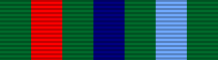 Samanya Seva Medal (SM)
 Uttam Yudh Seva Medal (UYSM) & Yudh Seva Medal (YSM)
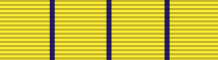 Vishisht Seva Medal (VSM)
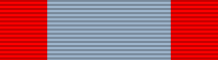 Special Service Medals
 Indian Operation Vijay Star
 Operation Parakram Medal
 India High Altitude Service Medal
 Videsh Seva Medal
 India 50th Anniversary Independence Medal
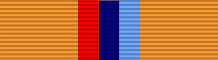 Indian 30 Years Long Service Medal
 Indian 20 Years Long Service Medal
 Indian 9 Years Long Service Medal
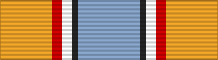 UN UNAVEM medal
From ‘Puttees’ to ‘Jugaad’: Tales of the Fauji Tailor
The popular quote, “An army marches on its stomach,” can easily be supplemented with, “Tailors make a marching army look smart.”
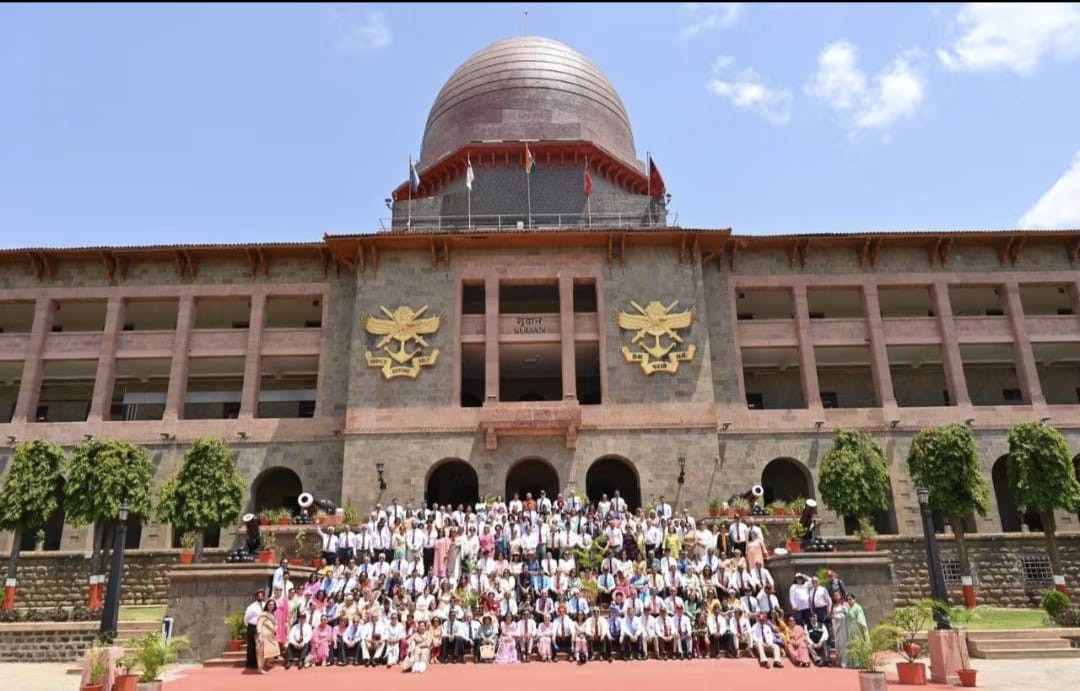
There are various kinds of fauji, or Army, tailors, now formally referred to as outfitters. One of the first routines upon joining the National Defence Academy, NDA, Khadakwasla, is receiving kits, or assorted dresses, and having them fitted by Kapoor & Co Tailors.
These kits, which include headgear and footwear, must be donned for a wide array of activities such as physical training, riding, drill, weapon training, academics, swimming and social activities, spanning both summer and winter versions.
The Puttee Parade
Dresses are promulgated in an academy order and are colloquially referred to as drill or weapon training order, with a prefix depicting the specific activity.
Interestingly, these orders are also used for benign ragging to improve cadets’ response times and teach the absolute correctness of uniforms. This is known as a “puttee parade,” as wrapping riding puttees entails significant time and finesse.
The word puttee is derived from the Hindi word patti, meaning a band or strip of cloth wound spirally from the ankle up to just below the knee.
Cadets are ordered to appear in different dresses in quick succession. In addition, Sikh cadets go through a “pugree parade” to ensure their turbans show six neat folds on both sides.
A Memorable Encounter at IMA
It was later at the Indian Military Academy, IMA, Dehradun, that our adjutant, a witty master of mnemonics, Major John Taylor, caught me with a little tear in my drill order.
In his characteristic manner, he remarked, “Kayjay, I’m Taylor by name and not by profession. Report to Kapoor Tailors after the drill parade.”
Tailors and Post Dated Cheques
When I joined my regiment in Ambala in 1977, Eddie Tailors from Delhi descended upon us, and young officers were promptly herded before them. They recorded measurements and booked orders for the service dress, which was made from imported serge.
The hefty bill was settled in instalments using post dated cheques. The running joke at the time was that in military stations such as Mhow, tailors could sell you elephants on post dated cheques.
In Poona, now Pune, we even had Hira Bankers to discount those post dated cheques just to bail out defaulters trying to clear their tailoring bills.
The Uniform Alteration Mix Up
Mercifully, the academy allowed us to buy blue and white patrols at subsidised rates, but these still needed to be customised with unit embellishments in the form of distinctly coloured pipings and patches.
The catch was that Eddie Tailors would not touch alterations. I eventually got my patrols altered during a course at the Armoured Corps Centre and School by the centre tailor, Tukaram.
Unfortunately, he made an error by putting extra piping on the cuffs, mistaking my regimental identity. As a result, I ended up with 7 Light Cavalry piping on a 63 Cavalry patrol, since both regiments share a light cavalry lineage and have nearly similar embellishments.
A Fauji Jugaad Saves the Day
Back with the regiment, a formal dinner night in the Officers’ Mess kit was announced just a week away. I rushed to Duggal Tailors, but he slotted me for delivery two months later and quoted ₹350, nearly half of my monthly salary.
In sheer desperation, I was forced to look for a jugaad, or quick fix. The enlisted soldier tailor, possessing a limited skill set, threw up his hands.
We did, however, have a unit civil tailor named Babaji. When I approached him, he warned that it would take time and cost a bit since it was a woollen dress. I persisted.
He asked for three days and ₹25. The deal was struck. That night, even the mess secretary complimented my turnout.
As they rightly say in the forces:
“Unit aur jugaad ka jawaab nahin.”
There is simply no match for a unit and its resourcefulness.