 Param Vishisht Seva Medal (PVSM)
.svg) Ati Vishisht Seva Medal (AVSM) with Bar
Ati Vishisht Seva Medal (AVSM) with Bar
 Samanya Seva Medal (SM)
 Uttam Yudh Seva Medal (UYSM) & Yudh Seva Medal (YSM)
 Vishisht Seva Medal (VSM)
 Special Service Medals
 Indian Operation Vijay Star
 Operation Parakram Medal
 India High Altitude Service Medal
 Videsh Seva Medal
 India 50th Anniversary Independence Medal
 Indian 30 Years Long Service Medal
 Indian 20 Years Long Service Medal
 Indian 9 Years Long Service Medal
 UN UNAVEM medal
North out of Atmanirbharta defence mission
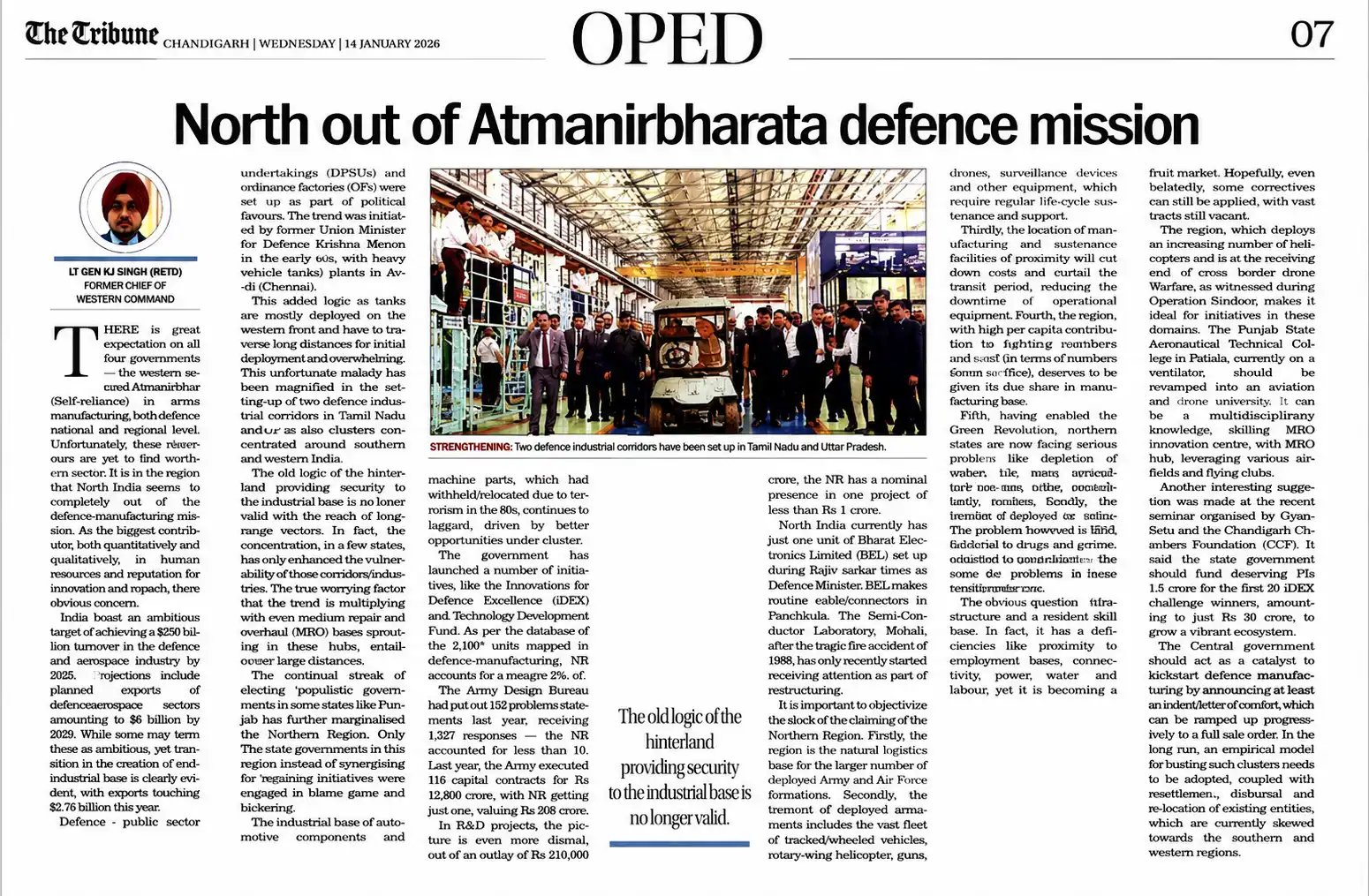
THERE is great expectation and a flurry of events on the theme of Atmanirbharta (self-reliance) in defence manufacturing, both at the national and regional levels. Unfortunately, these endeavours are yet to find worthwhile traction in the regional context. It is indeed worrying that North India seems to be completely out of this defence-manufacturing mission. As the greatest contributor, both quantitatively and qualitatively, in human resource and reputation for innovation and jugaad, there is obvious concern.
India has set an ambitious target of achieving a $26-billion turnover in the defence and aerospace industry by 2025. Projections include planned exports in defence/aerospace sectors, amounting to $5 billion by 2029. While some may term these as ambitious, yet traction in the creation of an industrial base is clearly evident, with exports touching $2.76 billion this year.
Defence public sector undertaking. Defence Public Sector Undertakings (DPSUs) and ordnance factories (OFs) were set up as part of political favours. The trend was initiated by former Union Minister for Defence Krishna Menon in the early 60s, with heavy vehicle (tanks) plants in Avadi (Chennai).
This defied logic as tanks are mostly deployed on the western front and have to traverse long distances for initial deployment and overhauling. This unfortunate malady has been magnified in the setting-up of two defence industrial corridors in Tamil Nadu and UP, as also clusters concentrated around southern and western India.
The old logic of the hinterland providing security to the industrial base is no longer valid with the reach of long-range vectors. In fact, their concentration, in a few states, has only enhanced the vulnerability of these corridors/clusters. The more worrying fact is that the trend is multiplying, with even medium repair and overhaul (MRO) bases sprouting in these hubs, entailing the ferrying of equipment over large distances.
The contrarian streak of electing opposition governments in some states like Punjab has further marginalised the Northern Region (NR). The state governments in the region, instead of synergising for regional initiatives, are engaged in blame game and bickering.
The industrial base of automotive components and machine parts, which had withered/relocated due to terrorism in the 80s, continues to languish, driven by better opportunities in other clusters.
The government has launched a number of initiatives, like the Innovations for Defence Excellence (iDEX) and Technology Development Fund. As per the database, of the 2,100 units mapped in defence manufacturing, NR accounts for a meagre 30-odd.
The Army Design Bureau had put out 152 problem statements last year, receiving 1,327 responses — the NR accounted for less than 10. Last year, the Army executed 116 capital contracts for Rs 1,80,000 crore, with NR getting just one, valuing Rs 295 crore.
In R&D projects, the picture is even more dismal — out of an outlay of Rs 210,000 crore, the NR has a nominal presence in one project of less than Rs 1 crore.
North India currently has just one unit of Bharat Electronics Limited (BEL), set up during Bansi Lal's tenure as Defence Minister. BEL makes routine cables/connectors in Panchkula. The Semi-Conductor Laboratory, Mohali, after the tragic fire accident in 1989, has only recently started receiving attention as part of restructuring.
It is important to objectively take stock of the claim of the Northern Region. Firstly, the region is the natural logistics base for the large number of deployed Army and Air Force formations. Secondly, the inventory of deployed armaments includes the vast fleet of tracked/wheeled vehicles, rotary-wing helicopters, guns, drones, surveillance devices and other equipment, which require regular life-cycle sustenance and support.
Thirdly, the location of manufacturing and sustenance facilities in proximity will cut down costs and curtail the transit period, reducing the downtime of operational equipment. Fourth, the region, with high per capita contribution to fighting resources of forces (in terms of numbers and sacrifice), deserves to be given its due share in manufacturing also.
Fifth, having enabled the Green Revolution, northern states are now facing serious problems like depletion of the water table, making agriculture non-remunerative. Resultantly, youth are either seeking to migrate abroad or getting addicted to drugs and crime. Industrialisation can alleviate some of these problems in the sensitive border region.
The obvious question is: does the region provide enough opportunities? The critical requirement is land, which can be made available. The pitch to utilise vast tracts of government-owned HMT in Pinjore after its closure has not found any traction. The complex produced heavy machinery and even precision instruments.
It had considerable infrastructure and a resident skill base. In fact, it has all elements, like proximity to deployment bases, connectivity, power, water and labour, yet it is becoming a fruit market. Hopefully, even belatedly, some correctives can still be applied, with vast tracts still vacant.
The region, which deploys an increasing number of helicopters and is at the receiving end of cross-border drone warfare, as witnessed during Operation Sindoor, makes it ideal for initiatives in these domains. The Punjab State Aeronautical Technical College in Patiala, currently on a ventilator, should be revamped into an aviation and drone university. It can be a multi-disciplinary knowledge, skilling and innovation centre, with MRO hub, leveraging various airfields and flying clubs.
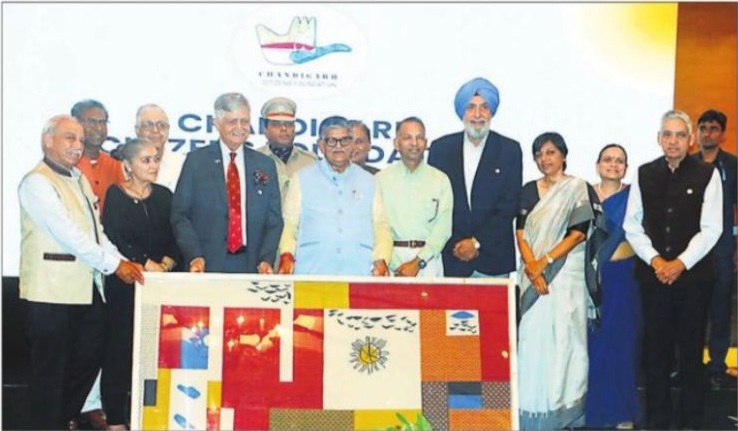
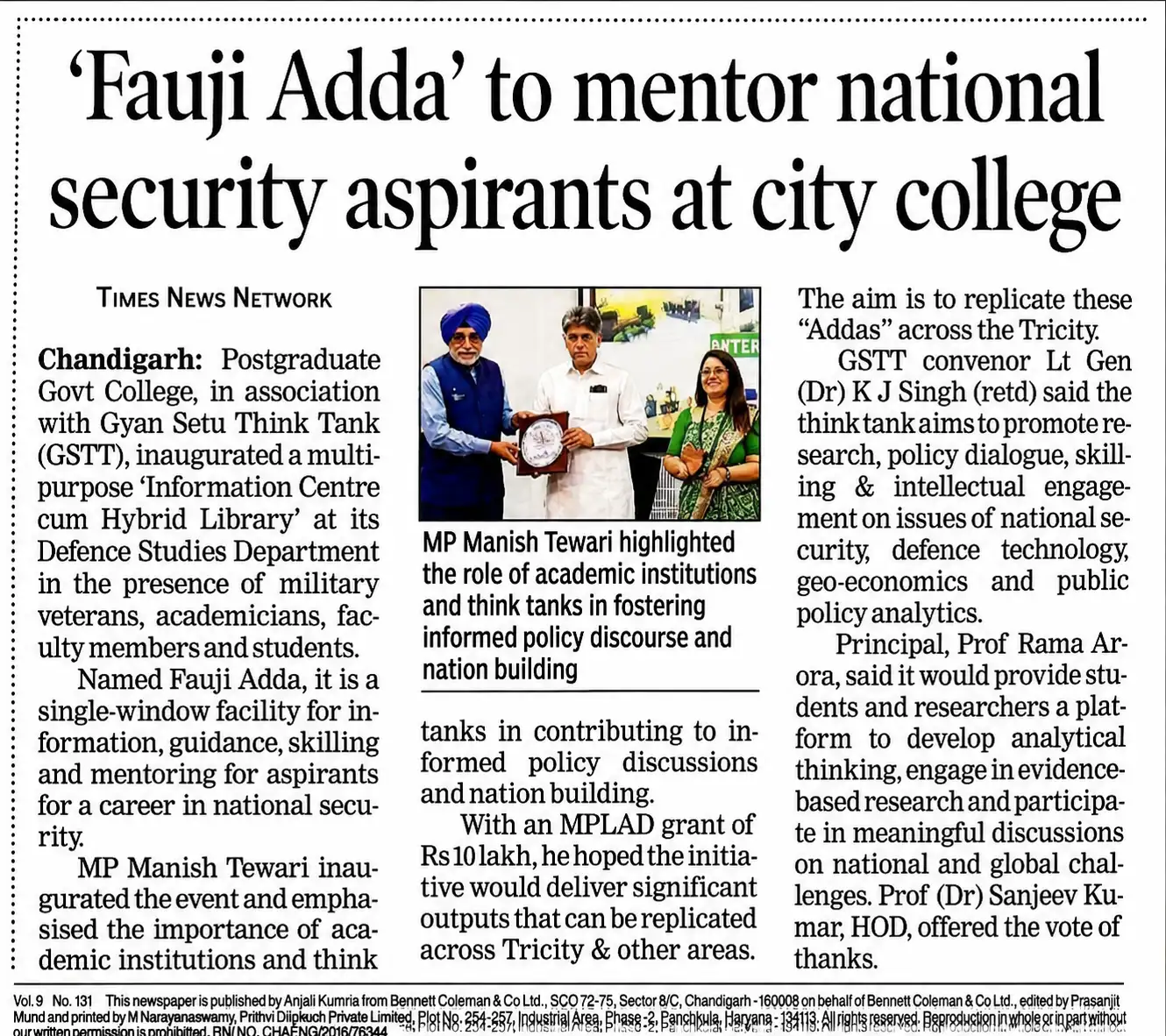
Another interesting suggestion was made at the recent seminar organised by Gyan-Setu and the Chandigarh Citizens Foundation (CCF). It said the state government should fund seed-money (Rs 1.5 crore) for the first 20 iDEX challenge winners, amounting to just Rs 30 crore, to spawn a vibrant ecosystem.
The Central government should act as a catalyst to kickstart defence manufacturing by announcing at least a mini defence corridor, which can be ramped up progressively to a full-scale one. In the long run, an empirical model for basing such clusters needs to be adopted, coupled with reassignment, dispersal and re-location of existing entities, which are currently skewed towards the southern and western regions.